the last question
prius.jpg
Feb 6, 2026
Spoiler warning: This contains the complete solution to the second comma.ai CTF challenge. If you want to solve it yourself first, stop reading.
Second challenge from the comma.ai/tinycorp CTF (originally for NeurIPS). One image, one flag.
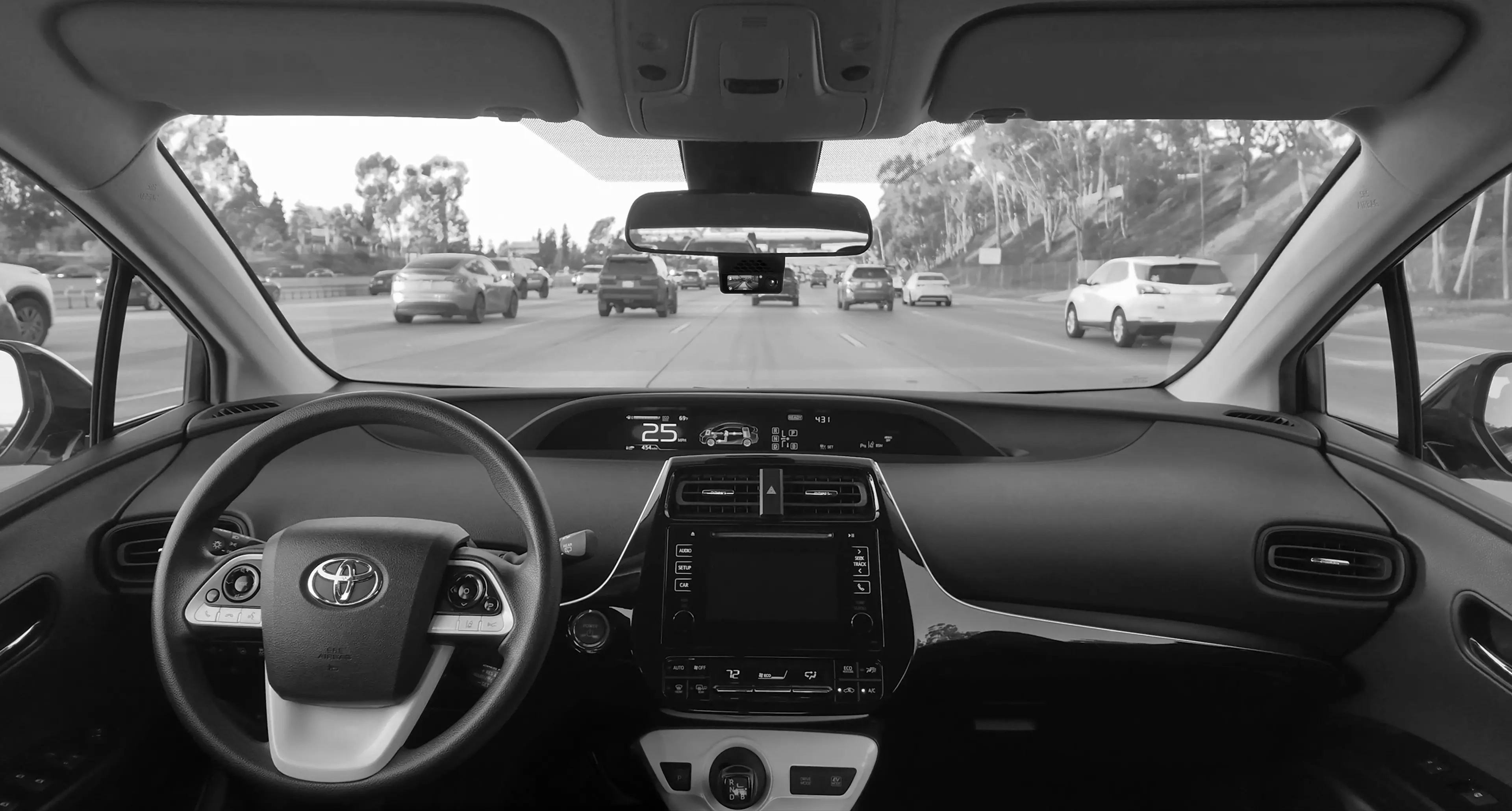
The EXIF has a hint:
$ exiftool prius.jpg
ExifTool Version Number         : 13.36
File Name                       : prius.jpg
File Size                       : 1019 kB
File Type                       : JPEG
JFIF Version                    : 1.01
Exif Byte Order                 : Big-endian (Motorola, MM)
X Resolution                    : 1
Y Resolution                    : 1
Resolution Unit                 : None
Y Cb Cr Positioning             : Centered
Exif Version                    : 0232
Components Configuration        : Y, Cb, Cr, -
User Comment                    : Congratulations on finding this secret message.
                                  This CTF is retired. However there is still one
                                  flag to be found in this image. Use this link to
                                  submit it: [redacted].
                                  Hint: Im a number, I should not exist, yet Im
                                  here. Good luck!
Flashpix Version                : 0100
Color Space                     : Uncalibrated
Image Width                     : 3840
Image Height                    : 2060
Encoding Process                : Baseline DCT, Huffman coding
Bits Per Sample                 : 8
Color Components                : 1
Image Size                      : 3840x2060
Megapixels                      : 7.9
Im a number, I should not exist, yet Im here.
What didnt work
I spent a few weeks on this before figuring it out. Most of that time I was fixated on the wrong reading of the hint.
“Im” and “Should not exist” made me think of imaginary numbers. i = sqrt(-1). That was wrong.
I also noticed the SOF marker has Component ID = 0, which is invalid per the JPEG spec. The Color Space field is 65535 (Uncalibrated). There are duplicate JFIF headers. Each of these is a “number that shouldnt exist” in some sense. None of them were the flag.
I ran binwalk, strings, jsteg, outguess, steghide, bit plane analysis, FFT watermarks, pixel LSB, DCT coefficient LSB, F5, Huffman table analysis, EXIF orphan byte mapping. Searched the raw byte stream for flag formats. Tried old flags from the first CTF as decryption keys. Nothing.
I kept reaching for tools instead of thinking about the format.
How JPEGs actually work
A JPEG doesnt store pixels. It stores frequency coefficients. The image gets split into 8x8 blocks, and each block gets a 2D Discrete Cosine Transform:
\[F(u,v) = \frac{1}{4} C(u) C(v) \sum_{x=0}^{7} \sum_{y=0}^{7} f(x,y) \cos\frac{(2x+1)u\pi}{16} \cos\frac{(2y+1)v\pi}{16}\]where $C(0) = \frac{1}{\sqrt{2}}$ and $C(k) = 1$ for $k > 0$. In practice scipy.fft.dct with norm='ortho' handles all of this.
This gives you 64 coefficients per block. The one at position $(0,0)$ is the DC coefficient. For DC all the cosine terms are 1, so it simplifies to $F(0,0) = \frac{1}{8}\sum f(x,y)$. Just the average brightness of the block scaled by 8. The other 63 are AC coefficients (the names come from electrical engineering. Direct Current for the constant component, Alternating Current for the oscillating ones), representing progressively higher frequency detail. Low frequency stuff like gradients lives near the top-left, fine texture and edges live near the bottom-right.
These coefficients then get divided by a quantization table $Q$ and rounded:
\[F_q(u,v) = \text{round}\left(\frac{F(u,v)}{Q(u,v)}\right)\]Thats what the file stores. When you open the image, the decoder multiplies back by $Q$, runs the inverse DCT, and gets pixels. The quantization step is where information is lost. Thats the “lossy” in lossy compression.
The key insight is that these quantized coefficients arent arbitrary. They are derived from pixel values $f(x,y) \in [0, 255]$ through a fixed transform. So every coefficient has a theoretical maximum determined by the math. You cant just put any number in there and have it correspond to a real image.
Well, you can. The decoder will happily accept it. It just multiplies, runs the inverse DCT, and clips any out-of-range pixels to 0-255. It never checks whether the coefficient was actually achievable. The image displays fine. But mathematically, the number is impossible.
The bound
For the DC coefficient, plugging into the formula above with $u = v = 0$:
\[F(0,0) = \frac{1}{4} \cdot \frac{1}{\sqrt{2}} \cdot \frac{1}{\sqrt{2}} \sum_{x=0}^{7} \sum_{y=0}^{7} f(x,y) = \frac{1}{8} \sum_{x=0}^{7} \sum_{y=0}^{7} f(x,y)\]Before the DCT, pixel values get level-shifted by 128, so $f(x,y) \in [-128, 127]$. The most extreme case is all pixels at 255 (shifted to 127):
\[F(0,0)_{\max} = \frac{1}{8} \cdot 64 \cdot 127 = 1016\]This images quantization table has $Q(0,0) = 2$, so:
\[F_q(0,0)_{\max} = \left\lfloor \frac{1016}{2} \right\rfloor = 508\]This isnt statistical or approximate. Its arithmetic. 508 is the ceiling.
The flag
I computed the theoretical maximum for all 64 coefficient positions and scanned every coefficient in the image. 123,840 blocks, 64 positions each.
One violation. Block (37, 111), position (0,0). Value: [redacted]. Max possible: 508.
Someone edited the file and set that one coefficient to a value no encoder could produce.
[redacted]
prius_flagged.jpg marks the block location with a red square. It’s just a normal looking patch of the photo, nothing to see with your eyes.